

Sound & Light POLLUTION
This post is NOT finished.
It won’t make final sense until it’s finished. It’s live because I need to verify something. Thanks for your patience.
It’s a city, what’s the big deal?
The big deal is that it’s utterly unnecessary.
Sound
According to the Umweltbundesamt, most complaints and noise reports are because of Traffic noise, and this has also been my experience.
I happen to live next to a street, so naturally there’s a lot of noise. In the below recordings, I wanted to record crickets, but even at very mild traffic it interrupts peace… until, something else took over.
LOCATION: Bemerode, my Apartment
Fireworks at 23:00 that peak my 32Bit recording device (that’s very impressive). The explosions are 36dB over ambient at 2km away from the source, with plenty of subharmonic frequencies that you can “feel”. I can’t imagine how much stress this causes animals in the area.
LOCATION: Park Der Sinne
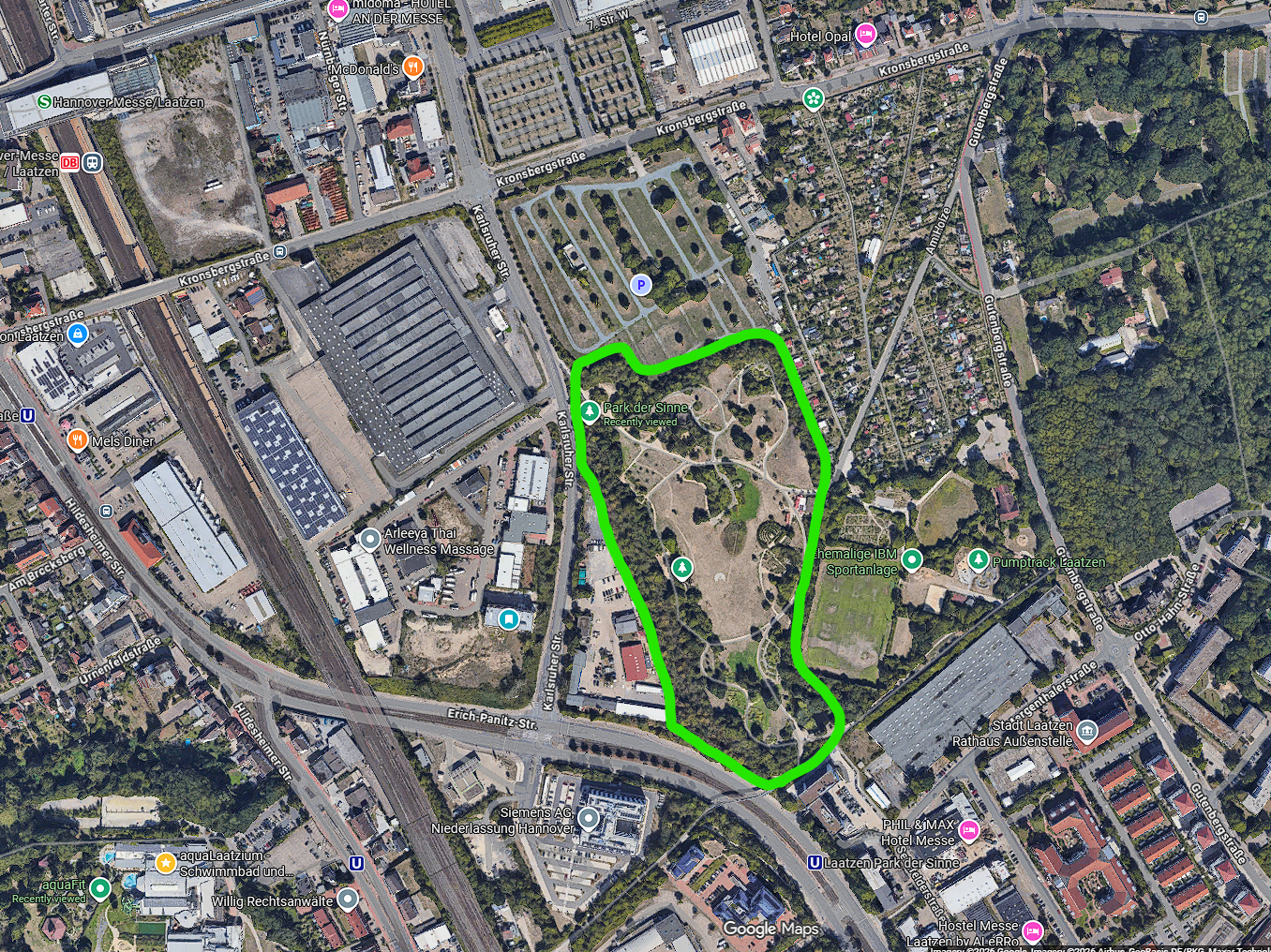
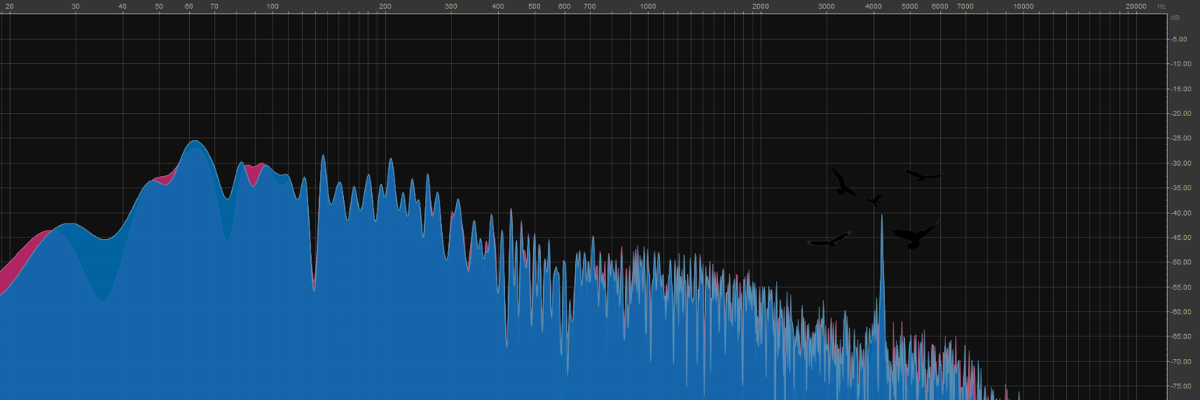
The recordings are high-pass filtered at 80Hz, because the sub-harmonic content is overwhelming, and I need you to be able to identify individual aspects in the recording, visualized below. The raw recording is much worse than what you hear.
Darker color = more acoustic energy.
Notice how much ENERGY is taken up by noise pollution in this NATURE PARK and how tiny
The Y axis is in Bark, a psychoacoustical scale that better visualizes frequencies (Hz) how humans perceive sound - at least better than the standard linear or logarithmic viewpoints.
“Picnic Table in the Park”
“CENTER of the Park” - technically furthest away from all roads.
Light
Look at all that wasted energy.
I took this photo on one of the clearest and highest air quality nights of the past five years, at a time of the year when astronomical darkness (when the Sun is more than 18 degrees below the horizon) kicks in at night; Verified by these Air Quality Index and the Annual Darkness chart, both of Hannover, Germany.
The image clearly shows the light pollution in Hannover, seen from the second-highest point in the region, called Kronsberg, with an elevation of 113 meters. Ironically to this topic on pollution, the highest point in Hannover is the landfill site Deponie Hannover, nicknamed Monte Müllo, at 122 meters.
This was approx two hours past sunset.
The bigger picture is that for the light to be diffused like that, it needs material to reflect, refract and diffract off of. Light interacting materials can include co2, methane, but also water if the humidity is high. On that night, the humidity was relatively high at 72%, 1004 hPa, but it would have affected the rest of the sky too, so we can assume that the cloud of ambiguous haze is in fact a smog cloud for Germany’s seventh most green city, among cities over 500,000 inhabitants (Berliner Morgenpost).
AQI for example, takes into account the following pollutants:
Ground-level ozone (O₃)
Particulate matter (PM₂.5 and PM₁₀)
Carbon monoxide (CO)
Sulfur dioxide (SO₂)
Nitrogen dioxide (NO₂)
Impact to citizens
Naturally (pun intended) human’s impact on nature is completely irrelevant to existence on this planet, so let’s focus on us humans because we’re really good at that…
Here’s a view from INSIDE my apartment on 2025 09 14 at 23:50 (sunset: 19:40) using a (by modern imaging standards) ancient iphone 8. The left image is my kitchen window, closed, and right is my open bathroom window.
In 2,000km² around Hannover’s city center, the light pollution is really terrible. Not as bad as big cities, but still absurdly high.
What we SHOULD be able to see, is the following.